
At a glance
Consensys has spent over a decade at the forefront of Web3 innovation, building the tools that empower millions to participate in the decentralized web – including the massively popular MetaMask wallet. Their users are pseudonymous, global, and often manage real assets in real time. In this high-stakes world, there’s no margin for error, and the cost of delay or misinformation is huge.
So when Consensys wanted to scale their support model, they needed more than an automation tool. They needed an AI agent that could perform under pressure, operate at scale, and earn the trust of a notoriously discerning audience. Fin provided the solution best aligned with Consensys’s needs.
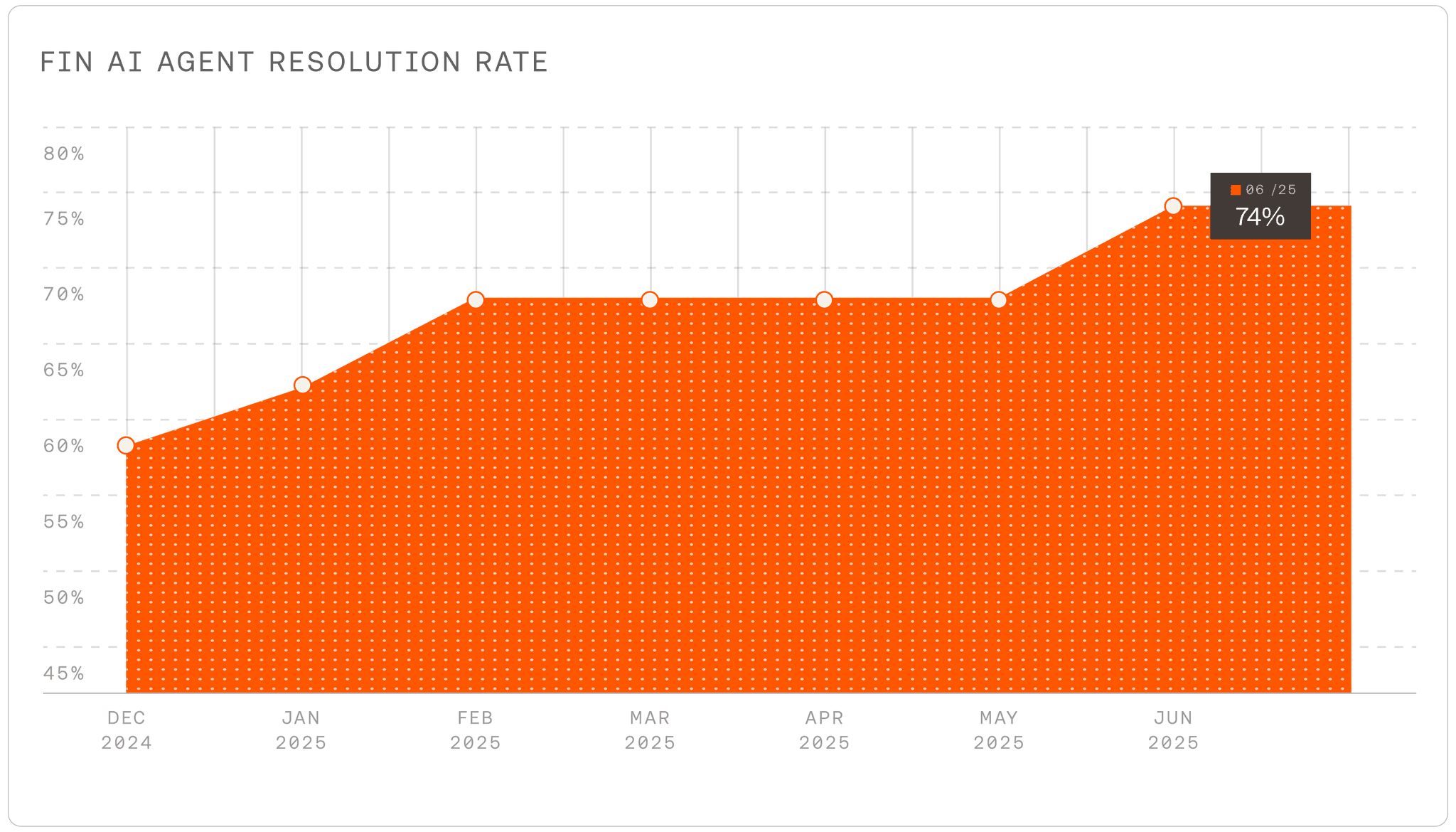
Within 8 weeks, Fin was resolving nearly 70% of support conversations, with the CSAT to match. Today, it handles ~20,000 resolutions a month, enabling Consensys to operate a true AI-first support organization.
Here’s their story.
The unique challenges of Web3 support
Crypto-native support brings with it unique challenges:
- Millions of customers, most of them pseudonymous.
- No KYC (Know Your Customer) process means no names, no emails, no persistent identities.
- Spiky volumes that can double or triple overnight.
- High stakes with customers managing tokens, wallets, and financial access.
“We have millions and millions of monthly customers in Consensys, very high support volumes, and many of our users are pseudonymous,” Yair Gal, Support Lead, explains. “They do not want to give us information about themselves, and we do not want to know it. That makes delivering secure, reliable support an extraordinary challenge.”
I was reading the stories of people who got scammed – people losing a lot of money, sometimes their life savings. It became clear to me that we needed to reduce that ‘window of opportunity’ for scammers to attack.
Adding even more pressure is that slow support creates opportunities for scammers to target frustrated customers. “If we don’t answer fast, they go elsewhere. And that's exactly how scammers strike,” says Dror Avieli, Managing Director at Consensys. “I was reading the stories of people who got scammed – people losing a lot of money, sometimes their life savings. It became clear to me that we needed to reduce that ‘window of opportunity’ for scammers to attack.”
Why the legacy system couldn't keep up
Providing support that addressed these challenges was urgent and, while the team’s legacy setup had served them well in the past, it was no longer keeping up with the pace of change.
They relied on two of the most established vendors in the market – one for ticketing, the other for live chat, with heavy reliance on vendor-led bots and professional services. “Every change was a project,” Dror shares. “It was slow, expensive, and rigid. We couldn’t iterate fast enough to keep our users safe.”
The support team wanted to own their automation stack. Not just configure it – own it. So they went looking for a solution that promised consolidation, flexibility, and real-time adaptability. That’s when they found Fin.
A considered decision
Consensys didn’t just take Fin at face value. They ran a full bake-off, testing Fin against two other popular AI agents, and an internal solution side-by-side. Each option ran live in production across real user conversations.
Fin didn’t just perform better. It gave us the power to move fast and own the outcomes. And the pricing model backed that up – we only pay when Fin actually resolves something. You're only paying for real results.
Fin won decisively, outperforming competitors by 20% on resolutions and 15% on CSAT. Importantly, it gave the team the control they were looking for with a no-code user experience, configurable workflows, and the freedom to iterate.
“Fin didn’t just perform better,” says Dror. “It gave us the power to move fast and own the outcomes. And the pricing model backed that up – we only pay when Fin actually resolves something. You're only paying for real results.”
Once the decision was made to partner with Fin, the Consensys team migrated to Intercom, Fin's AI-powered helpdesk over the holidays in late December. Fin went live shortly after. Within weeks, resolution rates shot up.
“We got to 50% containment very quickly,” Yair reflects. “Over time we increased this to 70%, and we were still seeing very high customer satisfaction. That combination is rare.”
Driving transformative results with Fin
Support at Consensys is now designed to be AI-first, with Fin at the center of their support strategy. They have a dedicated team focused on Fin optimization, while human agents are freed up for high-touch, high-context queries.
“The team isn’t strapped anymore,” says Yair. “They’re doing the complex, valuable work humans are best at. Fin handles the volume.”
The impact has been transformative:
- Performance results: Fin now handles nearly 20,000 monthly resolutions with 90% involvement in conversations and a resolution rate of over 70% that continues to grow.
- Fraud prevention: Faster, more accurate responses with 24/7 availability help close the critical “window of opportunity” that scammers exploit when legitimate support is unavailable or delayed.
- Strategic support model shift: The team now follows an AI-first support model, with complete control and ownership over automation configuration and workflows.
- Worldwide coverage: Real-time translation capabilities now serve users across nearly 200 countries in dozens of languages, extending high-quality support across Consensys's entire global user base through multiple channels, including Messenger and email.
- Privacy and security: Custom masking, routing controls, and Fin guardrails specifically tailored to Web3 privacy and security risks have been implemented, ensuring anonymous users stay protected while receiving quality support.
- Customer satisfaction: Customers routinely praise Fin in 5-star reviews, often believing they're interacting with human agents due to the quality and personalization of responses.
- Boosted team morale: Support agents now spend their time on high-touch queries that require human expertise and relationship building, dramatically improving job satisfaction.
These gains have been huge. But, for a company built on innovation, solving one challenge only reveals the next opportunity – and Consensys is already setting their sights on new frontiers.
What’s next: Expanding Fin, rethinking support
With Fin deployed for core channels like Messenger and email, Consensys is looking toward community support – spaces like Telegram and Discord, where users gather en masse and misinformation can spread fast.
“We’d love to bring Fin into those environments,” Dror says. “Right now, that’s one of the hardest jobs on the team, trying to manage the volume and tone of community conversations in real time.”
They're also exploring where else Fin can drive improvements – whether that's smarter in-product help, better self-serve content, or surfacing insights back to product teams.
“We want Fin wherever it can help,” says Yair. “Not just answering tickets, but improving how users interact with the product, and how we learn from those interactions.”
For a team operating with anonymous users, unpredictable volumes, and strict security requirements, Fin was a fast, effective fit – transforming how support works in one of the most complex environments in tech.
That shift is already underway. And now, they plan to push it further.